Saturday, August 10, 2013

Kobe, Kyoto and Tokushima: Where East meets West

Day 2:

Entrance to Ikuta Shrine
Not feeling refreshed from my late sleep, tea provided by the inn provided enough caffeine to wake me up. Another day, another place to go. Our next destination is Kobe. We took a train from Osaka to Sannomiya Station (This is where the famous Ikuta Shrine is located). Then, after a short walk along Ikuta road, we reached the Ikuta Shrine.

Ikuta Road
Ikuta shrine is one of the oldest Shinto shrine in Japan. According to Wikipedia, it was used as a base for a festival welcoming back warriors from the latest attempt to invade Korea. The shrine is quite small and I don't think it can even accommodate more than a hundred warriors comfortably. Unless they squeezed like a sardin can, it is plausible... 

The lady in red...
By the time we reached Kobe, it was already raining heavily. I love rain. Rain reminds me of my hometown. The smell of freshly mown grass after drizzle is my favorite smell. I always hope one day, when I am successful, I can afford to have a big garden beside my house. Every time when it drizzles, I would be sitting on the bench, looking outwards while drinking hot cocoa. Peaceful and relaxing.   

Shinto wedding ceremony
At the Ikuta Shrine, we were lucky to witness a wedding ceremony. Shinto is one of the very beautiful beliefs still practiced by Japanese. During the wedding ceremony, we saw dances performed by two young performers. The were graceful. After Ikuta Shrine, we visited the Kobe mosque. My friend performed his Friday prayer while I waited for him. Kobe mosque is one of the very few Islamic buildings in Japan that survived the World War II allied bombing in June 1945. Somehow, the mosque was eerily quiet and nobody was around after my friend finished his prayer.      

At the Kobe Mosque
Kobe is not really an ideal destination for people looking to save money. It resembles more like the affluent Gangnam minus the hostess bar than anything. This is a place where expensive Kobe beef restaurants and high fashion boutiques located side by side. Louis Vuitton retail shop in Kobe was fantastic even from the outside. The interior resembled a glittering palace with lots of helpers serving the customer. Anyway, I am a practical guy and I don't like spending thousands of dollars for an identical bag. 

Our Day 2, Kobe City Route
Getting to Kobe Tower...
Here we are... Kobe Tower!
Our next destination was the Kobe Tower. To recap, we walked from Ikuta Shrine to Kobe mosque to Kyu-kyoryuchi (the up-class fashion district) to Kobe Tower. Taking taxi in Japan was a big no-no for us. We preferred spending money on good food than on transportation. Transportation expenses in Japan can be exorbitantly high if compared to Korea.

The admission fee at Kobe Tower

Kobe Tower is one of the must-visit spots in Kobe. The entrance fee is either 600 Yen or 800 Yen that also includes an entrance to the Maritime Museum. We chose the 800 Yen ticket. However, I do not recommend the Maritime Museum! It was really boring! Better save your 200 Yen and buy me a drink. After around an hour indoor in both the tower and museum to avoid the rain, we went on with our main plan of the day - meeting our Japanese friend and her friend from Kuwait.

At the Kobe Tower

We were to overnight at his house today. Our host was kind and extremely friendly, we had a small party at his house (he cooked some nice looking Kuwaiti food for all of us) that night! I even learned from him an interesting Japanese phrase sure to make heads turn. "Hitome boresteh shi mai masta". It means "I fell for you on my first sight".

Yesterday by Kaori

Before we slept, we went to Sento /Onsen (a public bathhouse). I was very reluctant to go there but left without any choices, I merely obliged them. It was my first and will probably be my last in Japan. The water was either burning hot or freezing cold. Not good... not good...

Small gathering
Day 3:

Hi Kyoto!
One of Kyoto's landmark
Kyoto. From Kobe, we took a train to Kyoto. Kyoto is the eighth largest city in Japan. Kyoto is a very traditional city due to its influence as the Japanese capital for almost a thousand years. Spared from heavy bombings by the Allied forces during World War II, Kyoto continues to be main city in Japan to experience Japanese culture.

Kyoto is highly recommended and I love how the city balances modernity while at the same time preserving its heritage. A convenient way of getting around Kyoto? Use the city buses. A one-day pass costs 500 Yen which is cheap considering the bus route covers most places here and a one-way journey by bus is already 220 Yen.

Day Pass - 500 Yen
Hmmn.... what to eat for lunch..
Tempura (1,050 Yen)...
Toei Kyoto Studio Park or Toei Uzumasa Eigamura (entrance fee is rather steep: 2,200 Yen) was the first place we visited in the morning. It is a theme park catering for tourist interested in traditional Japanese streets and buildings. The main highlights of our trip there were the ninja performance (all in Japanese, Damn... cannot understand a thing!) and the ninja maze (It was really fun but sadly, the time needed to complete the maze was too short).

Toei Kyoto Studio Park!
Sayoranna... yawn...

We spent some time over there. Then in the evening, our friend (the Kuwaiti and my Japanese friend) went back to Kobe and Tokushima respectively. Our next destinations are the Shinkyogoku (a good place to buy Japanese souvenirs) and the Kamo river (to see the crowds lazing around at night). At Shinkyogoku, there is a long stretch of street catering for tourists buying Japanese souvenirs. My observation: shops located at the middle of the street somehow sold similar souvenirs cheaper than the rest. Hmmn...

Shinkyogoku - for Japanese souvenirs!

Kamo River


With the Pachinko shops still buzzing with people, we strolled along the Kamo river. Kamo river at night was literally occupied by young couples looking to escape the city heat or hide from their parents' prying eyes. Along the river, there were many high-end restaurants serving foreign cuisines. Our accommodation for the night was at Khaosan Kyoto - the best dormitory I've ever been! Clean, comfortable and the bed even comes with a curtain to block the lights.

Highly recommended dorm in Kyoto!
As my dorm was located on the fifth floor, unfortunately, it has only a shower place and a toilet. Imagine sharing the same shower place and toilet with all the residents of fifth floor. Luckily no two people had diarrhea at the same time... The dorm located on the second floor is much better. It has more toilets and shower places.

Day 4:

Kinkaku-ji - Temple of Golden Pavilion
The first destination of the day was the Kyoto station. As I was carrying a large backpack, and my friend had a hand luggage filled with souvenirs. We had to find some place to store our bags and Kyoto station was also a good place to start our journey. After storing our belongings, we purchased the one-day bus pass again.


First tourist attraction we visited? It was none other than the famous Kinkaku-ji or the Temple of Golden Pavilion (Entrance fee: 400 Yen), an UNESCO World Heritage Site. You can read all the history here. What I like about this place was the beauty of the garden. It was so picture perfect. After Kinkaku-ji, we went to Kiyomizu-dera (300 Yen), a very famous Buddhist temple in Kyoto. This is my favorite and most memorable place in Kyoto.

Japanese students at Kiyomizu-dera

Beautiful...


There's also an interesting story to be told. Hehe... While we were going up the steep road to reach the entrance of the temple, I saw some girls wearing Yukata (another type of Japanese traditional attire). Thinking it was another great opportunity to get my first photograph with Yukata ladies. I politely asked them for permission to take a picture of them and us with them. They happily obliged. I think, to them, we were irresistibly good looking.

Japanese in Yukatas
One of my favorite question to ask any locals and foreigners is "Can you guess which country you think I come from?". They answered....... "China"..... I was like "What? Chinese?". Ah never mind... Nevertheless, I spoke a little basic Japanese and this was how our friendships with Japanese strangers began. We accompanied them to take photos (they helped to take our pics while we reciprocated by becoming their part-time photographers).

Oh really, drinking from all three streams no good?
After sometime with them, we hurried off to the Otowa waterfall. "...The Otowa Waterfall is located at the base of Kiyomizudera's main hall. Its waters are divided into three separate streams, and visitors use cups attached to long poles to drink from them. Each stream's water is said to have a different benefit, namely to cause longevity, success at school and a fortunate love life. However, drinking from all three streams is considered greedy..." I never knew drinking from all three streams were considered greedy.

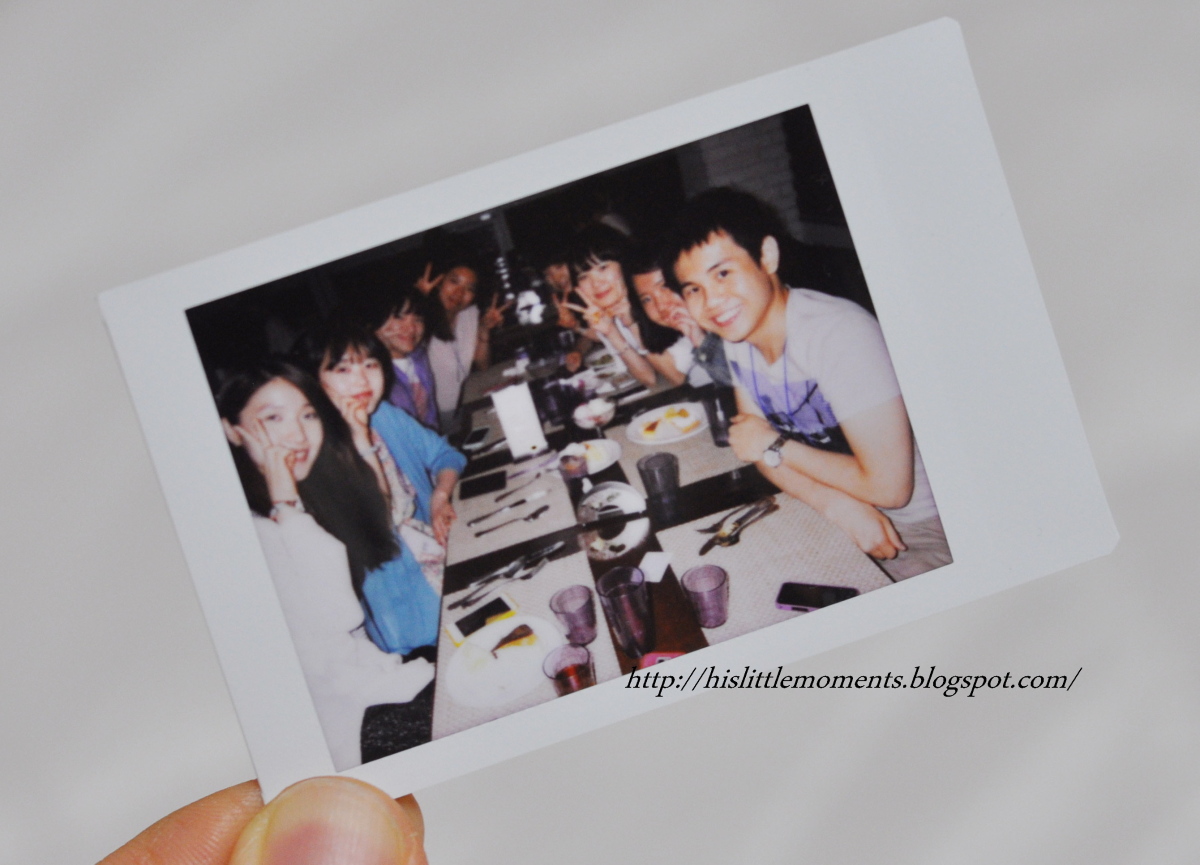
As there was nothing much to do further up the temple, we returned to the main temple and we met the Yukata ladies again. We exchanged our greetings and I (and my friend) took a Polaroid picture with them. While walking downhill, we went around the traditional streets and we even saw ladies wearing Kimono. Awesome! I bought several packets of Yatsuhashi, a traditional Japanese snack (250 Yen each), for my department staffs and Professors. The taste was so-so but I regretted not buying one for myself.

Ladies in Kimono
At the bus stop after the end of our trip to the temple, we saw the Yukata ladies (at the opposite direction) again. They waved at us and instinctively, we waved at them back. Meeting them was one of my most unforgettable moments in Japan. Sadly, our bus came too soon after and we did not manage to get their phone number or Facebook. Inside the bus, I saw them trying to look for us at their bus stand. It was nice knowing them though we don't even know their names. Very interesting huh?

Ladies in Yukata
Thanks for the memories... ladies in Yukata...

Fushimi Inari


Our final destination in Kyoto was the Fushimi Inari-taisha (entrance is free). A shrine famous for the wooden blocks along the gates. Since we did not have enough time to hike all the way up, we spent our time taking pictures along the gates. This shrine like the many shrines and temples we visited, it was equally beautiful. Statues of foxes were found in many places in the shrine. I was curious but so little time to know and see more. From Fushimi Inari Shrine, we took a bus back to Kyoto station. We were to take an express bus to Tokushima, a small city to meet our Japanese friends. Another city to cover... another adventure...

To be continued....

Thursday, August 1, 2013

A Moment to Remember : Japan (DAY I)

Travelling really opens up your perspective on Life and People. Sometimes, I felt blessed to have some money and travel to places without even start working. Some people who have leftover money uses it as future investment, saving every penny so that one day, they are able to fund their dream home or car. On the other hand, there are also people who spend whatever earnings they have without sparing a thought on their future.

I see you
I believe both ways are unreasonable. Of course saving money when you are young sounds great but this means you will not have spare money to travel. (It's just I felt that the feel of travelling when young is somehow different from travelling when you're old...) Meanwhile, spending all your money provides instant gratification but in the long run, you will run into debt.

Life is like reviewing journals, you'll never know when you'll finish reviewing...
It has now been exactly four years four months since I arrived in Korea, I felt great and everything is going on well. That feelings when I first arrived to Korea (nervousness and loneliness) were a stark contrast as of what I am feeling right now. It is good to make lots of friends when you are young. 

Personally, I felt university life is generally a time when you really grow up, not void of the responsibility as a young adult and more emotionally stable. Am I right? Of course there is always the outlier! That is another story. In university, we have more freedom and in my case, the decision to score well or not is totally in my hands. During high school, I was pressured to achieve successes sometimes... Sigh... 

(Get a 5 minutes break)

Osaka
Last month, just directly after my finals, I went to Japan. I figured out that since one of my university friends will be meeting my Japanese friends, I thought to myself, why not pay them a visit as well. We booked the flight three days before our departure and the return ticket was 440,700 Won (around 400 US dollar for a two hour trip)! This is almost similar to the plane ticket price for both Shanghai and Taipei (will write that soon). 

Bye Korea, Hello Japan :)
Like everyone, I am always excited to go to new places. After countless trips back to my hometown in Penang, Malaysia, this has became a ritual I am so accustomed to. Thus, I do not have any feeling of an adventure awaiting. However... This is my first trip to Japan... Before going to Japan, I did my visa (30,000 Won) at the Japanese consulate in Busan. (Malaysians do not need a travel visa to Japan from July 1st onward)

We departed from Busan to Kansai Airport in Osaka on 14th of June 2013. When we reached the airport, our adventure had begun. Not trying to be stereotypical or not, I felt Japanese are more orderly and less "noisy" than Korean and Chinese in that order. Sigh... Our plane arrived to Kansai with a majority of the lady passengers clutching Louise Vuitton handbags. I felt Koreans appreciate luxury goods much more than any other Asians I met which is sadly not a pleasant thing to see. Expensive handbags are great but if the purpose of having one is just to flaunt your wealth, then, it's a shame.   

Kansai is a modern, spacious and clean airport. The wide alleys and bright atmosphere invoked a sense of security that I had finally landed into a nice not-located-in-the-capital airport. Penang International Airport and Busan Airport are small in comparison with Kansai. After arriving at the airport, we hurriedly bought bus tickets to Umeda Station (automatic ticket vending machine located outside the airport). Osaka here we come!

"Watashi wa Jin Soon dez, Nihhon-goh Tanaka dez, Malaysia jin dez"

OSAKA!!!
Osaka is the third largest cities in Japan and is ranked as the world's second most expensive cities to live. Osaka is one of the key economic centers in Japan where it's GDP alone surpasses many countries. On the contrary, I felt Osaka is not that expensive when it comes to purchasing basic goods and foodstuffs. Transportation and housing rentals in Osaka are very expensive and that were the reasons why I felt it can sometimes be costly here.    

My 5000 yen per night room...
Our hostel (or the "luxurious inn") is called Chisun Inn located near Esaka Station (after transfering to Senri-chuo station). The room was clean and comfortable but was quite expensive (5000 Yen per night for single room) and rather small. Nevertheless, it was okay. The problem was the "hotel" management was very stringent with the check-in time, around after 2 pm if not mistaken. Most hotels/guesthouses I've been to do not have late check-in time. With no time to spare waiting for our rooms, we hand-in our bags for safekeeping. 

The receptionist was sooooo strong because she can carry both my travel backpack and my friend's hand luggage all by herself. I offered my help instead of her to carry our bags to the safe-keeping room but to no avail. Arming with passport, money, and camera, we began our travel to Osaka. The first thing we did was to find a place to eat! Walking around Osaka in June was surprisingly hot and humid. I observed that the people here dressed conservatively and unlike Korea, there were not many people wearing miniskirts or short pants. Ahem. Or maybe I'll have to wait until night time...

First meal in Japan
The first place we entered was an Udon restaurant. Generally, eating out at such restaurant cost around 450-500 Yen (5 US dollar). Unlike Korea, shops catering for people eating alone are everywhere. I mean everywhere!!! I have to admit that sometimes, I felt a little uncomfortable eating alone especially in McDonald's whenever I travel to Seoul by myself. Strangely, I do not have that feeling when I am in Daegu.


My Muslim friend had prepared a note on what to ask the waiter. It was whether the food contains pork or not in Japanese. Well, with no preparation in Japanese language prior to the trip, I tried to imagine what I will do if I were to ask the waiter. "Oink Oink No No (With a little pork-ish facial expression), Mooo Mooo Yes Yes!". It was funny to think about that sometimes.

Getting to Osaka Castle
Osaka Castle
Entrance ticket, a very expensive "bookmark"...
Hi cannon!
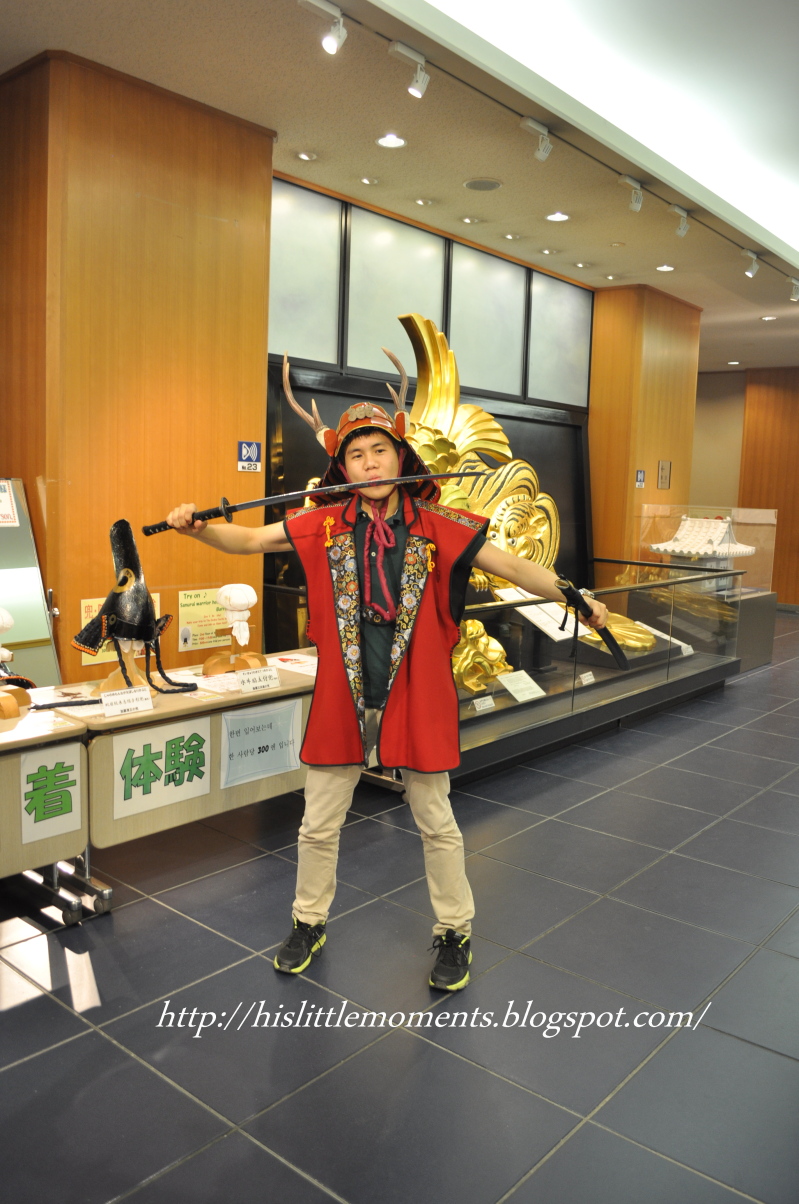
After lunch, we went to Osaka Castle (Entry 600 Yen). In my opinion, unless you have a liking for Japanese castles, calligraphy and fluent in Japanese, you will not really enjoy it. Osaka castle was so-so. It was not as big as I had expected. The only highlight was us wearing Japanese Samurai costume (300 Yen). It was fun and hilarious. I saw many Indonesian Chinese, Taiwanese and Koreans. Spoke to the Taiwanese and Indonesian Chinese in the Hokkien dialect and was quite surprise to know that they can understand it. Hokkien dialect is indeed very similar to Taiwanese.

I smell blood...
As expected, I felt that Korean tourists (not those people under school trips) are generally fashionable even under hot weather... :P

Viewed from Umeda Sky Building
Nice!
From Osaka Castle, we continued our journey to the Umeda Sky Building (called "umeda sukai biru" in Japanese). This building to us was extremely difficult to get to from the subway station. After walking around the area located in the crowded city center and asking countless people, we finally made it. 


Because of the heat, I bought various unique ice cream sold at Family Mart (a convenience store). Initially, I had already decided to try out the so-called "Condom ice cream" (I was just curious!) after watching it on YouTube about the strange things you can find in Japan, but I couldn't find one either in Osaka. Sigh.  

Umeda Sky Building was located some distance away from the main city center. Admission is 700 Yen but you can get a discount if you show your international student ID card. Umeda Sky Building is Highly recommended to see the vast expanses of Osaka's concrete jungle. If only we had more time, we would sit, observe and wait for the sun to set, from the top of the building.


Dotonbori
After Umeda, we went to Dotonbori. Dotonbori is a must-visit for everyone coming to Osaka. One sentence to describe it - Crowded, colorful and memorable. To get to Dotonbori, we got off from the Namba station. While walking towards Dotonbori, we stopped by at a curry restaurant where I ordered curry rice. I wanted the beef curry rice but somehow, I accidentally chose pork curry rice (580 Yen). The curry was very delicious!!! I felt like I was back home in Malaysia eating Indian curry!
Love you curry
580 Yen Yummy Curry
I love you curry...
Osaka. It quickly became evident to me that I am now in the food capital of Japan (Tears of joy). If my hometown, Penang is the food capital of Malaysia, I am happy to be in Osaka. The food from both cities are equally great. After taking pictures at the Glico Man signboard landmark, we wandered around. A-must to buy in Osaka is the various Kit Kat chocolates. I regretted not buying most of the Kit Kat here because compared to Kyoto, it was cheaper here. I purchased packs of Green Tea Kit Kat and a pack of Dark chocolate Kit Kat.   
The famous crab...
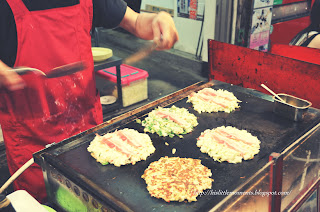
Okonomiyaki - Osaka Pancake
Spreading the special sauce....
Okonomiyaki, the hardest Japanese food name to remember...
Then, we walked further up to a place where you can see the Kani Doraku Crab. Since we were able to eat some more, I ordered Okonomiyaki (500 Yen) but due to Okonomiyaki containing slices of pork, my friend had to settle for Takoyaki. Okonomiyaki is a pancake containing mainly shredded cabbage and topped with various sauces. It was so-so.

Don't be deceived... it's worth more than you think...
That's all for our first day in Osaka. I realized that because most of the meals in Japan are around 500 Yen and 500 Yen (around 5 US dollar) is in the form of a small coin. I had the tendency to overspend here... In Korea, the 500 Won coin, similar in size with the 500 Yen coin, can only buy you a small can drink. Here you can get reasonable meal!  

To be continued...

Friday, July 12, 2013

The Story Behind a Temple: Yongjusa (용주사)

Buddhism is one of the oldest religions arriving in South Korea circa 300 AD. During the Shila Dynasty, Buddhism became popular and it was the national religion of Shila in the 5th century. Yongjusa was a well-known temple located in Hwaseong City, just over an hour drive from the center of Seoul.


Getting there:    


Get down at Byeongjeom Station, 병점역 (use Seoul Subway Line 1), this journey will take approximately an hour plus from Seoul Station (서울역). This journey by subway will cost you around 1,850 Won (if paid by cash). Then, take Bus 34-1 to Yongjusa Temple (용주사).

Entrance fee is 1,500 Won for adult or 1,000 Won for youth. Group entry (if more than 30 people) discount is available here. Opens from 8 am to 7 pm. 

The Story:

Some distance from this temple, we can find the royal tombs of Crown Prince Sado and his son King Jeongjo, the 22nd ruler of the Joseon Dynasty. According to history, Prince Sado was condemned to death by his own father, King Yeongjo.

He was locked in a rice chest during the hot summer day and after eight days, he died of suffocation. Prince Sado was wrongly prosecuted and died at 27 years old while his son, Jeongjo was still 11 years old.    


Once his son, Jeongjo became the king, he moved his father's grave site from Mt. Baebong in Yangju to Hwasan in Suwon. Hwasan was regarded as the most auspicious site at that time. This was because he was touched by a Dharma from a monk named Bok-yeong about how great parents' love and sacrifices were.

Entrance to the temple housing Buddha statues
The night before the celebration for the completion of temple in 1790 to protect his father's tomb. King Jeongjo dreamt of a dragon flying in the sky with a magic ball in his mouth. After his dream, he named the temple Yongjusa meaning "Temple of Dragon with a Magic Ball".


Based on old records, the temple housed the mortuary tablet of Prince Sado and Princess Gyeongui (Sado's wife) as well as his son, King Jeongjo and Queen Hyoeui. Religious services in commemoration of the four were offered six times a year until the services were forcibly stopped during the Japanese occupation of Korea. 

Our temple guide
Yongjusa is a temple widely equated with filial piety as well as to honor King Jeongjo's love for his father, which continued long after his passing. My trip there was quite interesting because we were fortunate to have a local guide explaining various "national treasure" around the site. Temples in Korea are generally the same but Yongjusa is different in that sense, because it is larger than most temples I've been.


The story of Buddha
Temple stay
I felt it would be much nicer to visit this place during the autumn when the foliage around the temple changes its color. Overall: An educational trip! On a side note, this temple also offers temple stay program for anyone interested in understanding the meaning of filial piety in Buddhism point of view.

"... the gentleman devotes his efforts to the roots, for once the roots are established, the way will grow therefrom. Being good as a son and obedient as a young man is, perhaps, the root of a man’s character..." Confucius.

Saturday, May 25, 2013

Just.

KNU Times, after 4 years writing.
나는 한국에 방학 빼고 4년 동안 계속 있었다.
한국에선 오랫동안 살았죠?
나는 내 친구 만나고 난 내 한국어 실력이 항상 비교하고..
아직도 부족한다고 느꼈어

왜 한국사람처럼 한국어 잘할수없니?
난 빨리 잘하고
빨리 배우고
빨리 한국어로 원벽하게 얘기하고

이거저것 다 잘하고 싶어
언어, 생활, 생애, 등 등

원벽
원벽

행복
행복

꼭.

우선 내 한국어 많이 많이 늘려
이후에 중국어
그담은..? 나 충분했어.
언어 더 배우는 이유 없어... 
그때 내 꿈 하나 이루어졌어.

Wednesday, May 15, 2013

A Moment Back in Time: Gyeongju

Gyeongju (경주) is one of the most historical places in Korea. During the Shila Dynasty, Gyeongju is the capital city and this area encompasses almost two thirds of the Korean Peninsula. Therefore, due to its cultural and archaeological importance in relation to the history of Korea, it has one of the most historical sites and is the most-visited place outside major cities. 

At Seokguram
I happen to visit this place a few months ago as Gyeongju is very near to Daegu (my city). Gyeongju resembles a small city, trying to balance its modern development while at the same time, preserving its heritage. Due to the distance of this city far from other major cities, it is not well connected by major railways or does it has an airport.

Map of Gyeongju
Nevertheless, the city's charm lies in its thousand-long years of Korean history and the relative ease of travel by bus. It is recommended to travel to Daegu (from Seoul or anywhere else) if planning to visit Gyeongju, as you can just take a bus (very frequent) from Daegu directly there. Although Gyeongju is also directly accessible by train (albeit taking only the slowest train) from Seoul, it can take almost 5 hours because of the numerous stops along the way. 

From Daegu to Gyeongju

From Daegu Station (if from Dongdaegu Station, 동대구역, the bus station is located outside the station), take a cab to Dongdaegu Express Bus Terminal (동대구 고속버스터미널), after alighting from the cab, walk across the road to the opposite direction to the other bus terminal. Buy your ticket (4,200 Won) and the journey begins.

Bulguksa Temple

In my case, I chose a morning trip (more time to explore this place). My destinations: Bulguksa Temple (불국사) and Seokguram (석굴암) Grotto (both are UNESCO World Heritage Sites). After getting off the bus at the Gyeongju bus terminal, I crossed the road (to the small bus stop) and took a city bus (either Bus no. 10 or 11) to Bulguksa Temple. Cost: 1500 Won.

Gyeongju city bus routes
The bus I took: Bus no. 10 also passes by Gyeongju World (a water park). After that, I took another bus to reach Bulguksa Temple. According to many websites, Bulguksa Temple is one of the most impressive temple in Korea and is the masterpiece of Buddhist art. In my opinion, it was just so-so. Seokguram was interesting. After alighting from the bus, I had to walk a distance to reach this temple. 

The entrance to Seokguram
Seokguram located at the top

Even though, then, the weather was quite hot and humid, the lush trees around the area provided a shady respite. One has to climb up the steps to get inside the temple housing the grotto (behind the panel of glass). Unfortunately, no photography is allowed there. 

Summary of my trip: 

Bus schedule for Bulguksa - Seokguram - Bulguksa
Gyeongju Bus Terminal (Bus no. 10 or 11) --> Bulguksa Temple (Entrance: 4,000 Won) --> Seokguram Grotto (take another bus outside the exit of the Bulguksa Temple). Trip back is the same.


On the way back by Bus no. 10, you can get off at the Anapji (a lotus pond) or the National Museum. Before leaving, don't miss out tasting the delicious 찰보리빵 (Glutinous barley bread, a red bean paste filled pancake and is a little chewier than the ubiquitous Gyeongju bread) and the 경주빵 (Gyeongju bread, a red bean paste bread). 

You might also like..

Related Posts Plugin for WordPress, Blogger...
"This is not the end. It is not even the beginning of the end. But it is, perhaps, the end of the beginning" ~Winston Churchill~